
How fast can you deploy after a hurricane hits Port Saint Lucie?
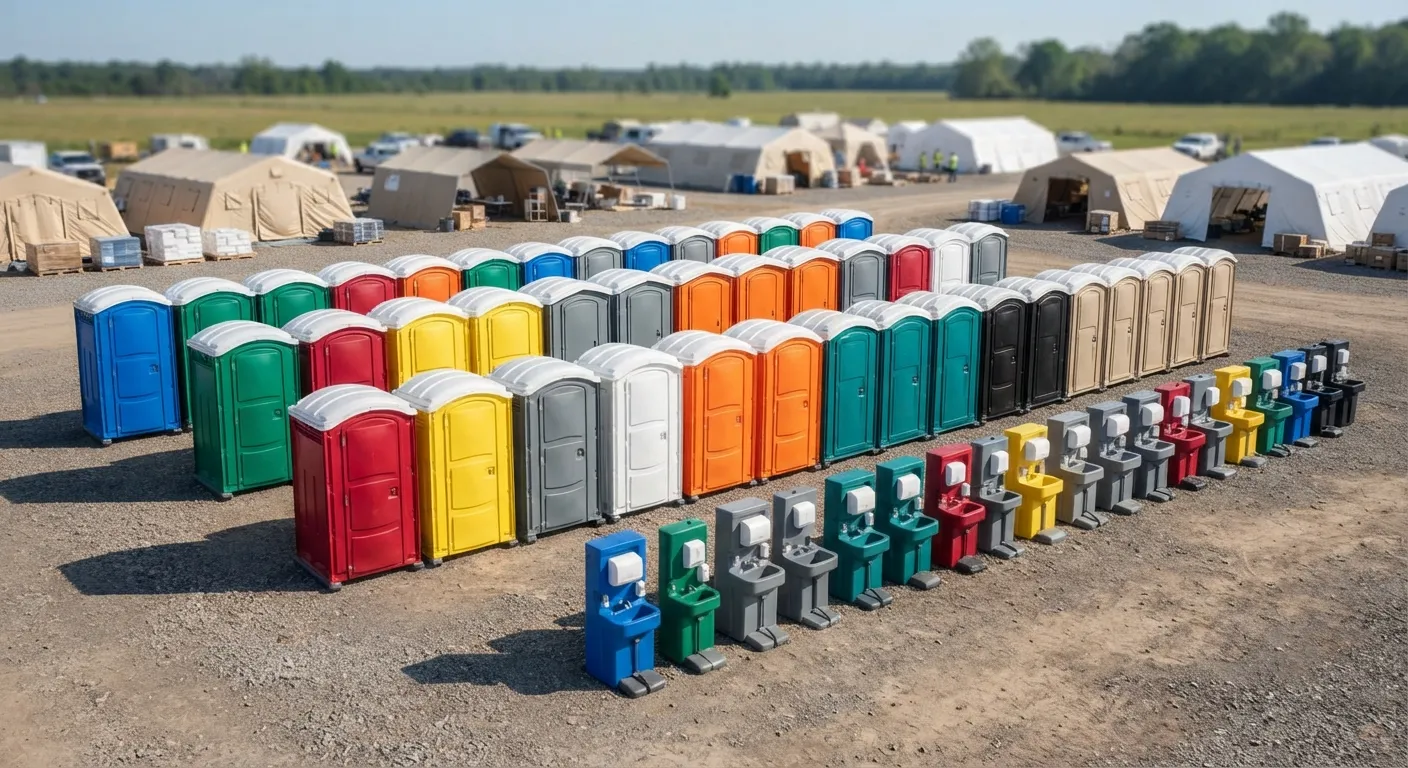
Speed depends on road access and how many units your site needs, but disaster response works differently than a standard portable toilet rental booking. We keep standard porta potty rental units and handwashing stations staged for fast dispatch across Port Saint Lucie, and we prioritize shelters, medical staging areas and utility crew camps first. A single delivery truck needs about 60 feet of straight clearance to set units, which matters when debris blocks driveways or a downed line narrows the street. If your site sits near River Park, about 6.6 miles northeast, or Fort Pierce South, about 13.0 miles north, tell us at booking so we can route the truck around known trouble spots. Crews clearing debris and workers embedded on a damaged site still fall under OSHA portable toilet requirements: OSHA 1926.51(c)(1) sets the ratio at one toilet for 20 workers or fewer, climbing to one toilet and one urinal per 40 workers once the crew passes that threshold. An emergency porta potty rental placed within the first 48 hours keeps a work camp or a shelter compliant while permanent plumbing stays offline. For multi-week deployments we recommend the monthly porta potty rental rate structure instead of daily billing, since disaster recovery rarely wraps in a week.
What sanitation equipment actually works during a disaster response?
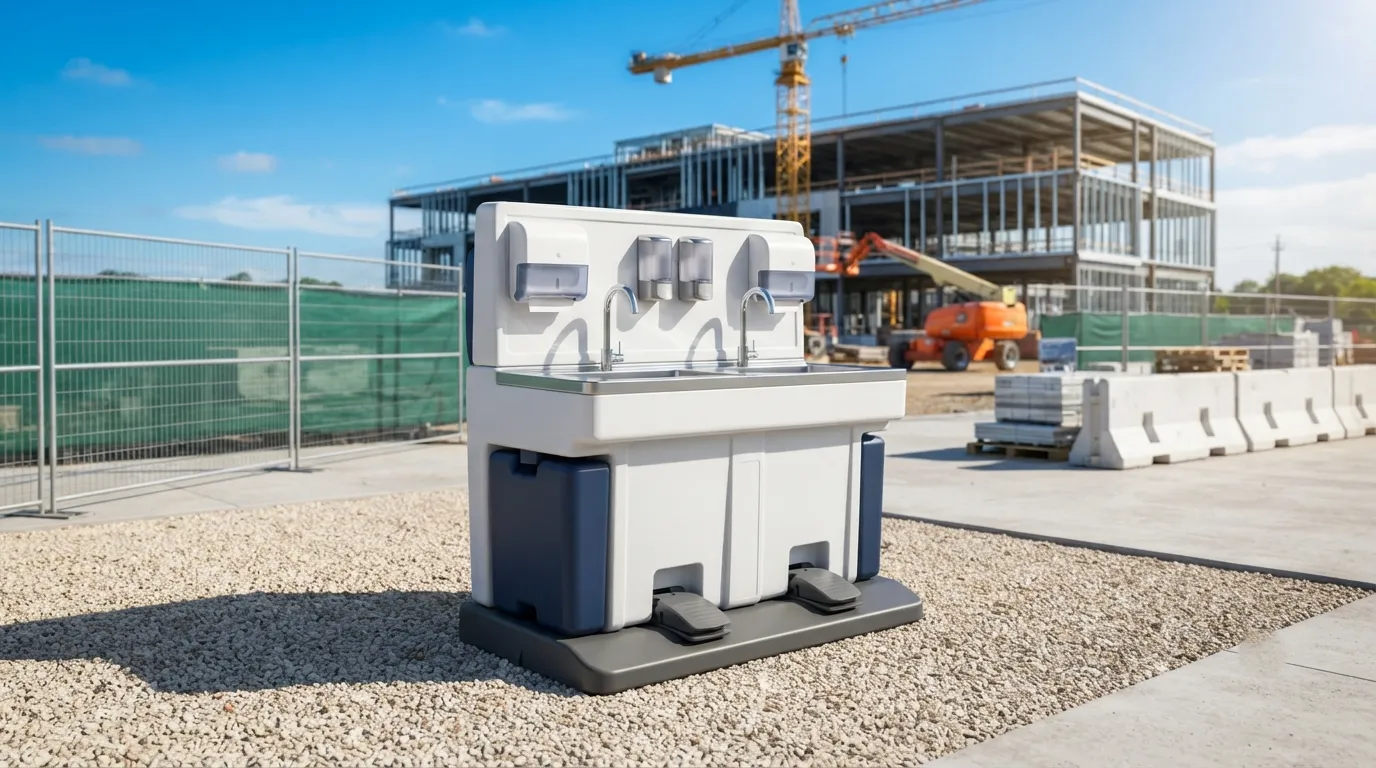
Standard units cover the bulk of a disaster deployment, but grid failures and flooded septic systems mean some sites need more. A restroom trailer rental makes sense for command posts and long-term shelters where staff need running water; the 2 stall restroom trailer or 4 stall restroom trailer fits smaller operations, while an 8 stall restroom trailer handles a larger encampment. Where flooding has knocked out a septic system entirely, a holding tank rental bridges the gap until the tank gets pumped or repaired; a typical residential tank runs 1,000 gallons and normally gets pumped every 3 to 5 years, but storm surge can force an off-cycle pump-out. Our emergency septic service handles those calls. Handwashing matters just as much as toilets: 29 CFR 1910.141(d)(2) requires soap and towels or a hand-drying device at wash stations, since sanitizer alone does not satisfy the standard. A handwashing station rental or portable sink rental covers that requirement for shelters and feeding sites. If cleanup crews are also handling debris soaked in fuel, paint or pesticide runoff, OSHA 1926.51(f)(1) requires washing facilities for that specific contaminant exposure. Sites also managing debris removal often need a roll-off dumpster rental alongside sanitation, and a construction dumpster rental account can be set up in the same call.
Do disaster relief sites need ADA accessible units?
Yes, and it is easy to overlook when a site is moving fast. ADA Standards section 213.2 requires that where portable toilets are clustered, at least 5 percent of the units must be accessible, with a minimum of one no matter how small the cluster. An ADA accessible porta potty needs a 60 inch turning circle inside per ADA Standards section 304.3.1, and the approach route has to stay at least 36 inches wide per ADA Standards section 403.5.1. Shelters run by the city or county, feeding sites and medical triage areas draw elderly residents and people with mobility limits more than a typical job site does, so this is not optional paperwork. Ground stability matters too: ADA Standards section 302.1 calls for a stable, firm, slip-resistant surface, which is worth checking after heavy rain has softened staging areas around Port Saint Lucie. We also stock light towers for night operations at shelters and staging sites; a light tower rental or temporary power pole can keep a site running once daylight runs out and grid power has not returned. For sites needing secure perimeter control during distribution of supplies, temporary fence rental or crowd control barrier rental keeps lines organized and equipment protected overnight.
How much does disaster relief sanitation cost compared to a standard rental?
Emergency pricing follows the same bands as routine rentals; a standard unit runs 100 to 350 dollars a day depending on duration and delivery distance, detailed on our porta potty rental cost page. Multi-week deployments should ask about porta potty rental per day versus weekly rates, since weekly and monthly terms usually save money over stacking daily rentals.
Can you deliver to a shelter that is not a normal job site?
Yes. We deliver to shelters, churches, community centers and government staging areas across Port Saint Lucie the same way we serve construction sites, provided there is roughly 60 feet of clear approach for the truck. Call ahead if debris is blocking access.
Will you service units daily during an active response?
We schedule service based on usage and staffing needs. ANSI/PSAI Z4.3 sets a baseline of one visit per week for up to 10 users over a 40 hour week, but shelter conditions often call for tighter intervals, which we arrange case by case.
What if our site loses septic capacity during flooding?
A holding tank or extra pump-out from our septic pumping service can cover a failed or backed-up system. Flooded drain fields sometimes need repair before a septic tank can be used again safely.
Do you serve towns near Port Saint Lucie during regional disasters?
Yes. We cover Stuart, about 13.5 miles southeast, Fort Pierce, about 14.5 miles north, and Jensen Beach, about 11.0 miles east, along with the rest of our service areas. Check our porta potty rental in Port Saint Lucie page for local dispatch details.
Next step
Get a delivery date
Tell us the address, the dates and the headcount. We size the order and confirm the route.