
How do porta potties work?
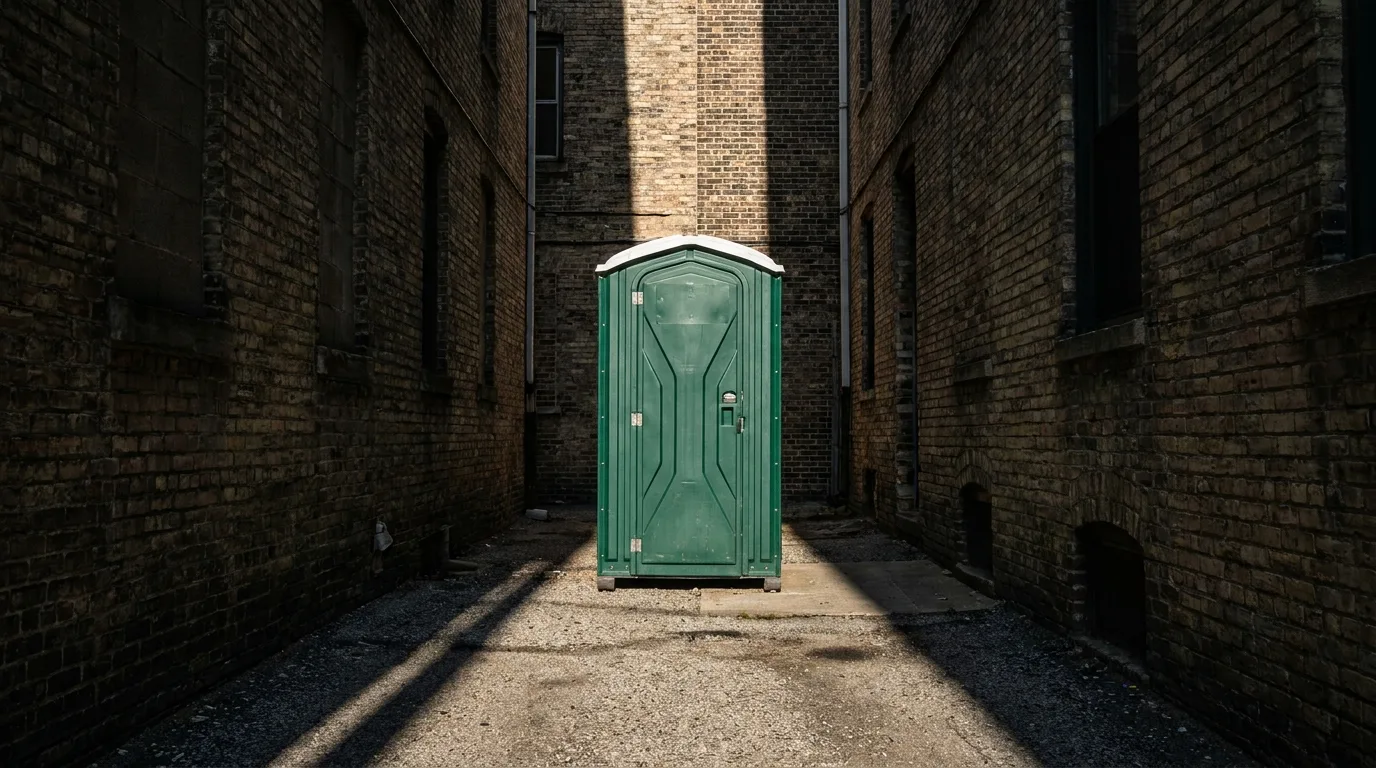
The unit is a standing box, about 44 by 48 inches on the ground and roughly 92 inches tall, built around a holding tank instead of a sewer line. You do your business, close the lid, done. There's no bowl full of standing water like at home. Below the seat, waste drops straight into the tank, where the chemical treatment breaks it down and keeps the smell in check between visits. That's the whole mechanism behind portable toilet rental units you see on job sites and at events across Port Saint Lucie.
For a construction worker running to a porta potty between tasks, the appeal is speed: no waiting on a building bathroom, no walk back to the trailer. OSHA 1926.51(c) sets the ratio at one toilet for every 20 workers on a crew of 20 or fewer, and that math is the backbone of any construction site services plan. Curious how that scales on a bigger job? Check how many porta potties do I need and run your headcount against the OSHA table directly.
Camping trips work the same basic way, just smaller crews and shorter stays. A camping porta potty rental uses the identical tank-and-chemical setup, just serving fewer people over a weekend instead of a 40-hour work week.
How does a portable sink work?
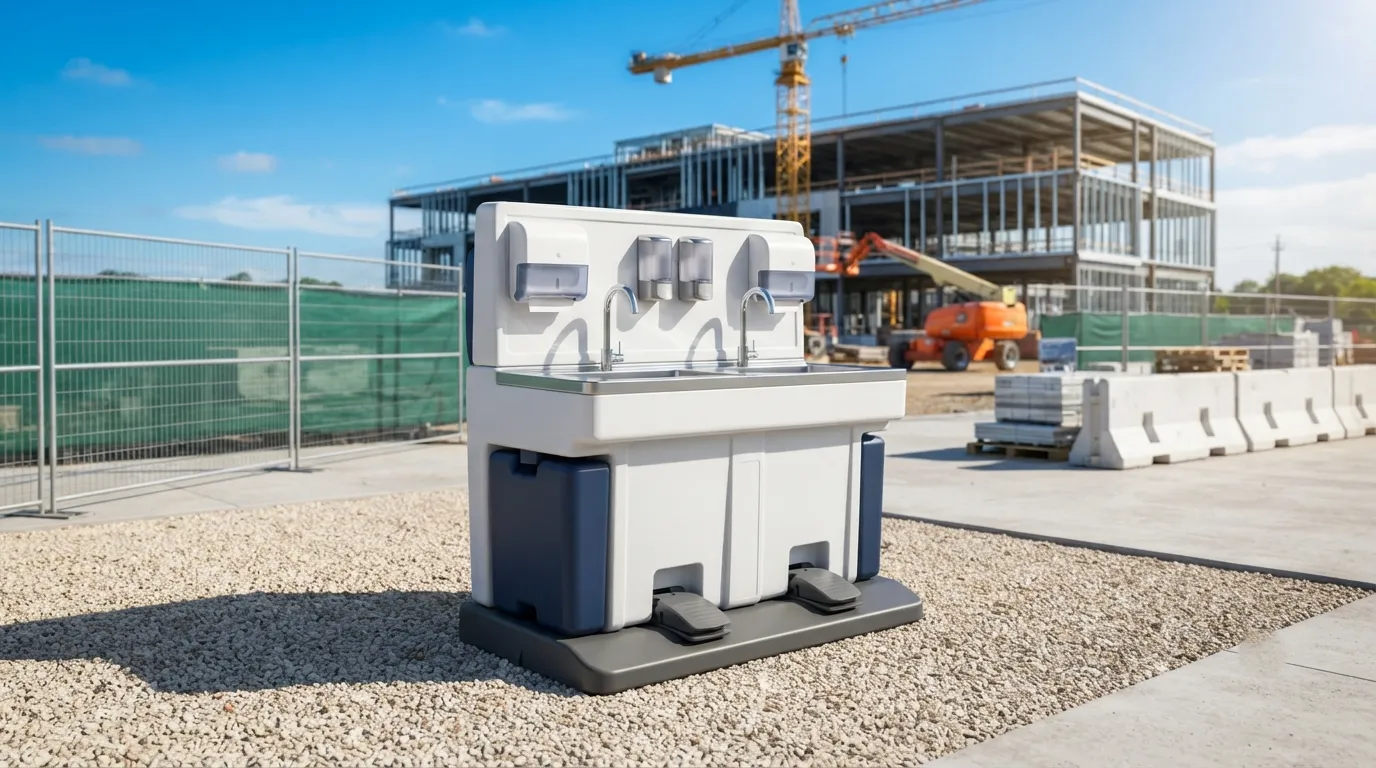
A portable sink runs on a fresh water tank up top and a gray water tank below, with a foot pump or hand pump pushing water through the faucet. No pipes, no city hookup. Soap sits in a built-in dispenser, and used water drains into the lower tank instead of the ground. That setup is what makes a portable sink rental or handwashing station rental legal for job sites where 29 CFR 1910.141(d)(2) requires soap and towels, not just sanitizer. Hand sanitizer alone doesn't meet that standard.
If your crew is spraying paint, coatings, herbicides or insecticides, OSHA 1926.51(f)(1) kicks in separately and requires washing facilities on top of general sanitation. Worth knowing before your Port Saint Lucie crew starts a coating job. For general water access, OSHA 1926.51(a)(1) just requires an adequate potable water supply on-site, which a handwashing station requirements page can walk through in more detail. Farm crews have their own version of this rule: OSHA 1928.110 sets field sanitation standards at one facility per 20 hand-labor employees, within a quarter mile walk, which matters for any farm and agricultural restrooms setup outside the city.
How do flushable porta potties work?
A flushable unit, often called a deluxe flushable porta potty, uses a small onboard freshwater tank and a pump to push a rinse through the bowl after each use, similar to an RV toilet. Waste still goes into a holding tank below, just like a standard unit, but the flush action clears the bowl instead of leaving it visible. It's a step up in comfort without needing a sewer connection.
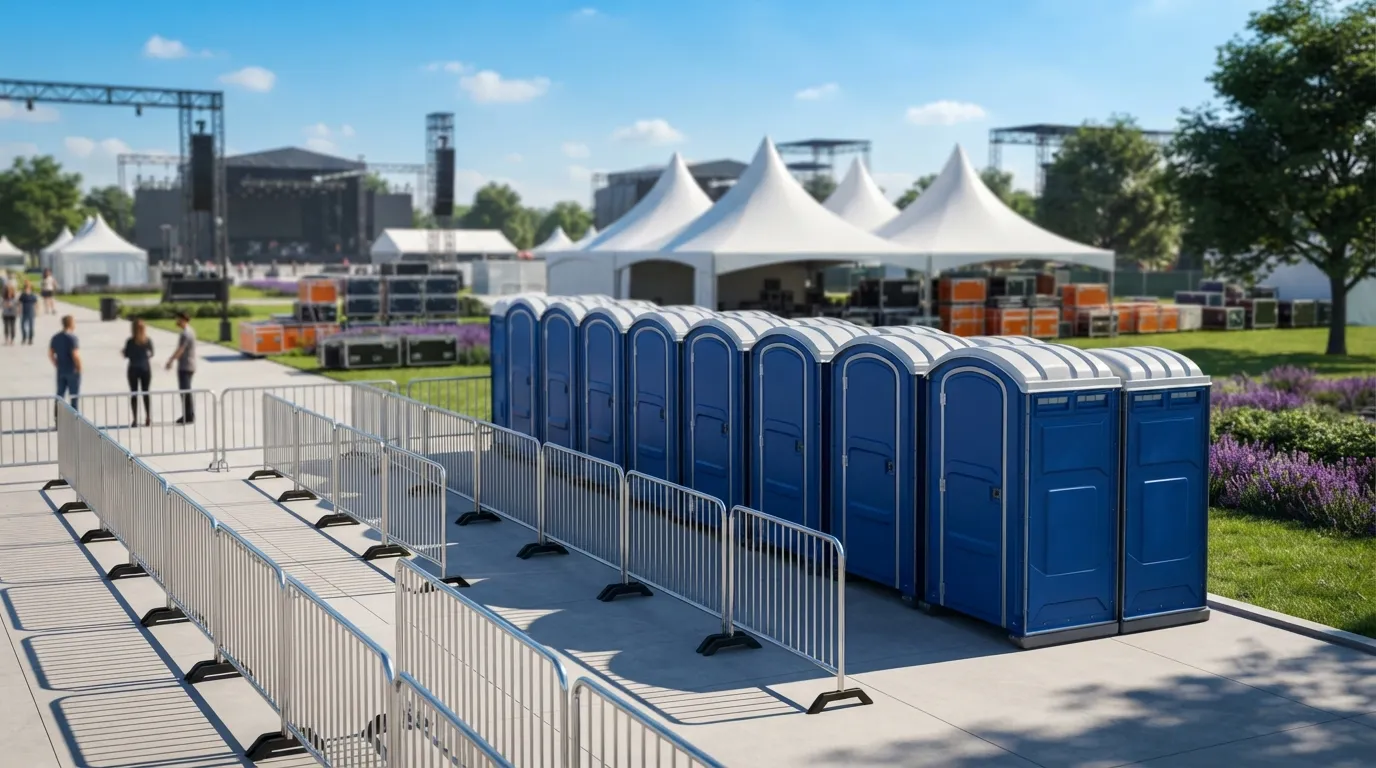
These units run higher than a standard porta potty rental because of the extra plumbing and pump hardware. An ADA accessible porta potty often pairs flushable features with a wider door and interior turning space, since ADA Standards section 304.3.1 calls for a 60 inch turning circle and section 404.2.3 sets minimum clear door width at 32 inches. Section 213.2 also requires that at least 5 percent of clustered units be accessible, never fewer than one, which matters for weddings, festivals and any event restroom rental with several units grouped together.
| unit type | day | week | month |
|---|---|---|---|
| standard | $100-$350 | $130-$500 | $125-$325 |
| deluxe | $85-$1200 | $150-$290 | - |
| ada | $200-$400 | $240-$400 | - |
Full pricing detail lives on the porta potty rental cost and porta potty rental per day pages, with monthly breakdowns on monthly porta potty rental.
Why do porta potties need chemicals?
The chemical treatment is what keeps a portable toilet usable between service visits. Without it, waste breaks down slowly and odor builds fast, especially in Florida heat. Searching for portable toilet chemicals near me usually means someone's unit ran past its service window. ANSI/PSAI Z4.3 sets the baseline interval at one service visit per week for up to 10 users over a 40 hour week, which is why route schedules matter more than they seem to. Ask about frequency on the how often are porta potties cleaned page, or if smell is the real complaint, do porta potties smell covers what's normal and what's not.
Septic systems use a related but separate chemical logic. A residential septic tank typically needs pumping every 3 to 5 years depending on tank size and household size, and a grease interceptor gets pumped once fats, oils, grease and solids hit 25 percent of liquid depth. Some homeowners try septic tank cleaning chemicals between pumpings, but that doesn't replace a scheduled pump-out. See how often to pump a septic tank or book through septic pumping service if a visit is overdue. Port Saint Lucie properties on well and septic, particularly further from the coast, should treat that 3 to 5 year window as a planning number, not a guess.
Do porta potties smell if serviced on schedule?
Not much, no. A unit serviced weekly under the ANSI/PSAI Z4.3 baseline should smell like the deodorizer, not sewage. Heat speeds up odor buildup, so Port Saint Lucie events in summer sometimes need twice-weekly service instead of once.
Can I rent a porta potty for one day?
Yes. Daily rates run $100 to $350 for a standard unit. Weekend events, weddings and one-day construction punch lists all use day rentals regularly, and delivery fees apply separately.
What size door does an ADA porta potty have?
ADA Standards section 404.2.3 requires a 32 inch clear door opening. That's wider than a standard unit's door, giving wheelchair users room to maneuver inside.
How far will a delivery truck drive for a roll-off?
Roll-off trucks need about 60 feet of straight clearance behind the truck bed to place a dumpster. Confirm your driveway or lot layout before delivery day.
Do I need a permit for a porta potty in Port Saint Lucie?
Placement in the public right of way needs confirming with the city directly; permit rules vary by property and location. Check porta potty permit requirements before delivery.
Next step
Get a delivery date
Tell us the address, the dates and the headcount. We size the order and confirm the route.